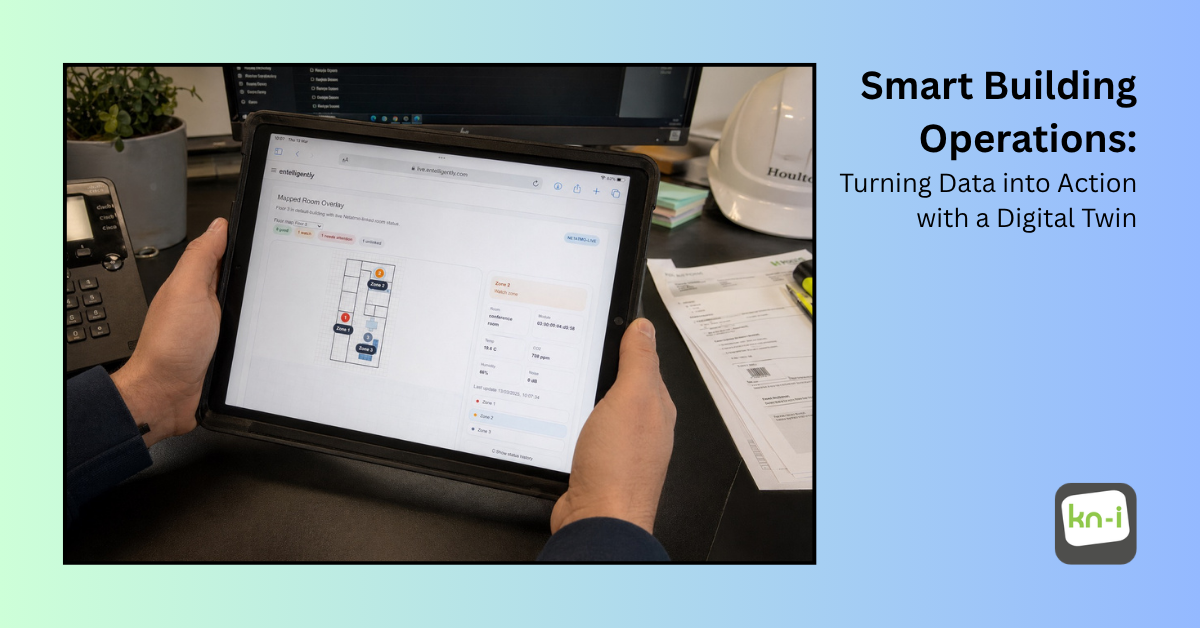
Modern buildings are full of data -but turning that data into effective smart building operations is still a challenge for most estates and facilities teams.
Sensors track temperature, CO₂ and humidity. Building management systems monitor HVAC performance. Occupants raise comfort issues. Energy systems generate a constant stream of operational information.
But the challenge isn’t collecting data. It’s knowing what to do with it.
How do you turn that information into better decisions? How do you improve working conditions without increasing cost? And how do you respond to issues before they escalate into complaints, or worse, system failures?
This is the problem Entelligently is designed to solve.
Moving Beyond Monitoring
For years, building technology has focused on monitoring. Dashboards display conditions. Alerts trigger when thresholds are crossed. Teams respond as issues arise.
In practice, this often leads to a reactive way of working. Data sits in different systems, issues are identified late, and understanding the root cause takes time. Even when the problem is clear, the action needed to resolve it may sit in a completely separate system.
What’s missing is a joined-up view—one that connects what’s happening in a building to what should be done about it.
“Instead of juggling separate systems for complaints, sensor readings, and controls, everything is connected into a single workflow.”
Entelligently is built around that idea, helping organisations move toward a more connected and proactive model of smart building operations.
Bringing Data, Insight and Action Together
At its core, Entelligently acts as a central operational layer for buildings. It brings together environmental data, historical trends, system performance and user feedback into a single platform, underpinned by a structured approach to data, such as our Data Management Canvas.
“Entelligently acts as a central hub between building data and action.”
The real value isn’t just visibility, it’s clarity.
Instead of asking teams to interpret raw data, the platform helps answer more practical questions. Why is this space uncomfortable? Is this a one-off issue or a pattern? What should we do next?
This is where smart building operations start to become practical, when data is no longer passive, but actively supports decision-making.
What Smart Building Operations Actually Means in Practice
In many organisations, “smart building” still means having more dashboards, more sensors, and more data.
In reality, smart building operations are about something much simpler:
connecting insight to action in a way that improves how a building performs day to day.
That means:
-
understanding how spaces are actually behaving
-
identifying issues early, before they escalate
-
making informed adjustments based on real conditions
It’s less about technology in isolation, and more about how that technology supports the people responsible for running buildings.
Seeing the Building, Not Just the Data
One of the most important developments in Entelligently is the introduction of a digital twin capability.
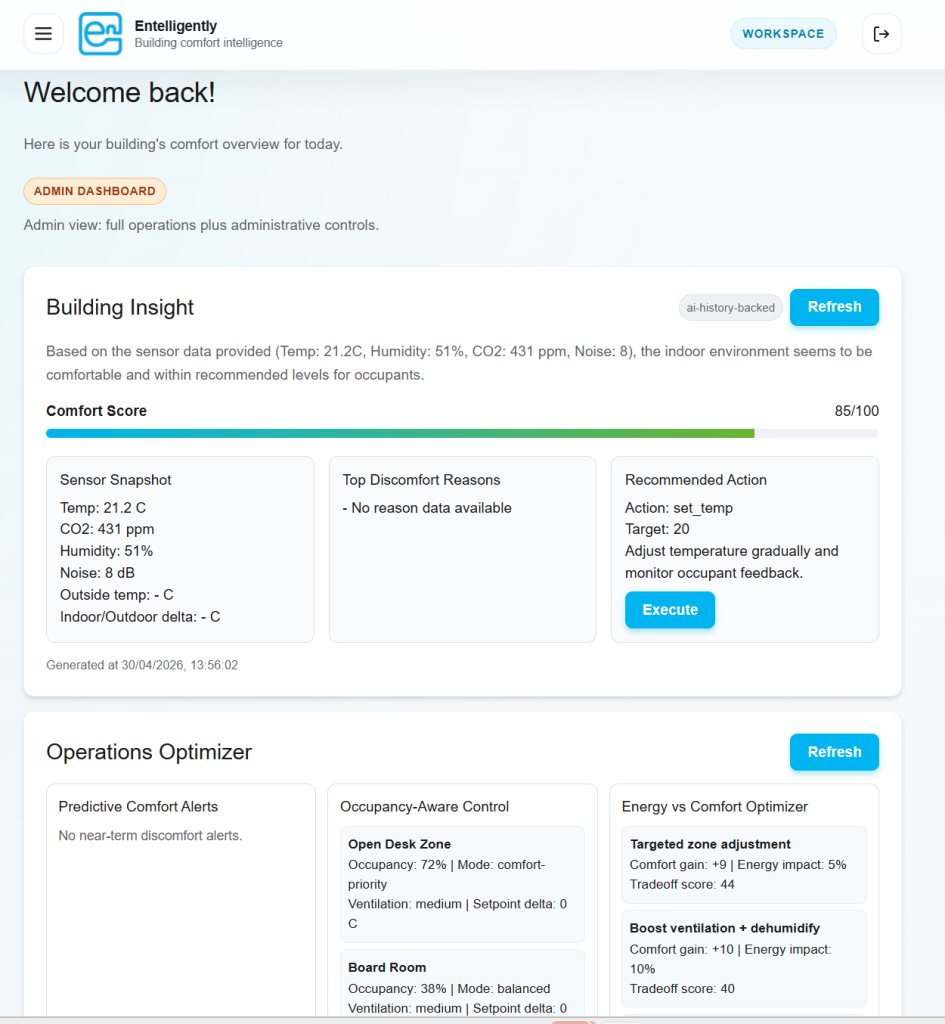
Rather than looking at data as a series of disconnected readings, the platform allows you to visualise your building – it’s floors, rooms and spaces- all linked directly to live conditions.
It’s still early in its development, but even now it changes how people engage with building data.
Instead of asking “what are the CO₂ levels?”, the question becomes “what’s happening in that meeting room?”
Instead of looking at temperature trends in isolation, you can see how conditions vary across a floor or between adjacent spaces.
That shift in perspective matters.
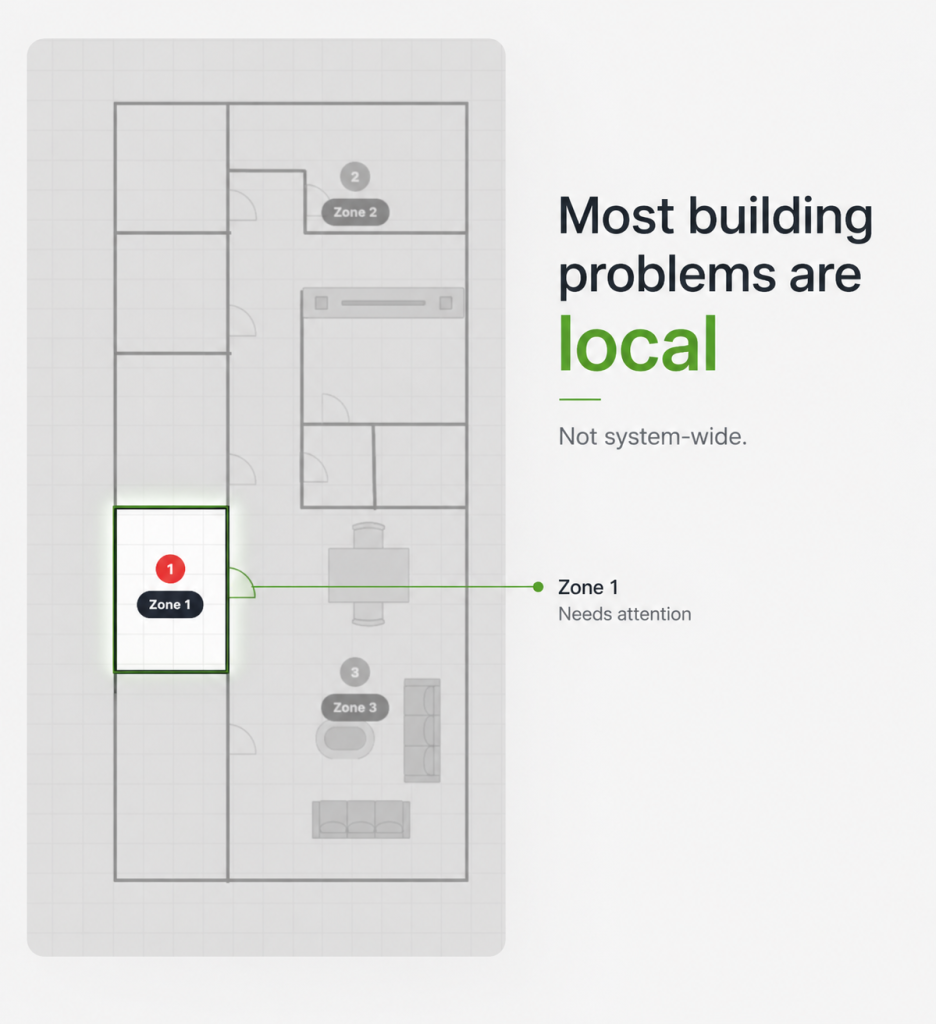
Most building issues are not uniform. They are local, contextual, and often tied to how spaces are actually being used. A single poorly ventilated room can generate more complaints than an entire building operating slightly below optimal conditions.
By grounding data in the physical reality of the building, the digital twin helps estates teams understand not just what is happening, but where and why.
More importantly, it begins to connect building performance directly to the experience of the people using those spaces.
From Insight to Action
Understanding a problem is only part of the equation.
One of the frustrations many teams experience is the gap between insight and action. You can see the issue, but resolving it involves switching systems, coordinating teams, or making decisions without full confidence.
Entelligently is designed to close that gap.
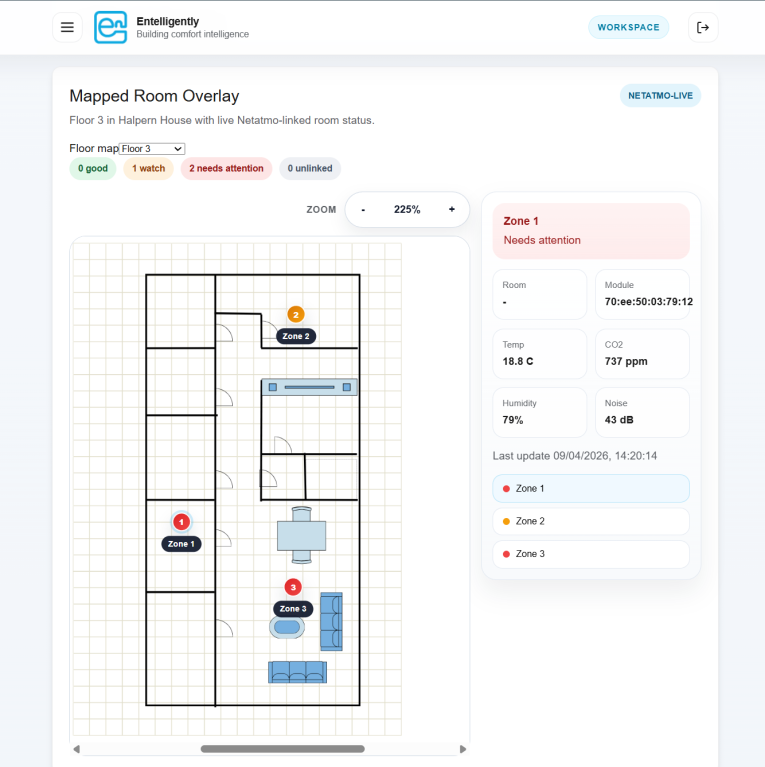
Within the same environment, teams can monitor performance, investigate issues and make adjustments. Whether that’s reviewing HVAC behaviour, adjusting setpoints, or responding to a reported issue, the workflow remains connected.
Over time, this creates a more continuous operational loop where buildings are not just observed, but actively managed.
Making Sense of Complexity
Buildings are complex systems, and interpreting what’s happening inside them is not always straightforward.
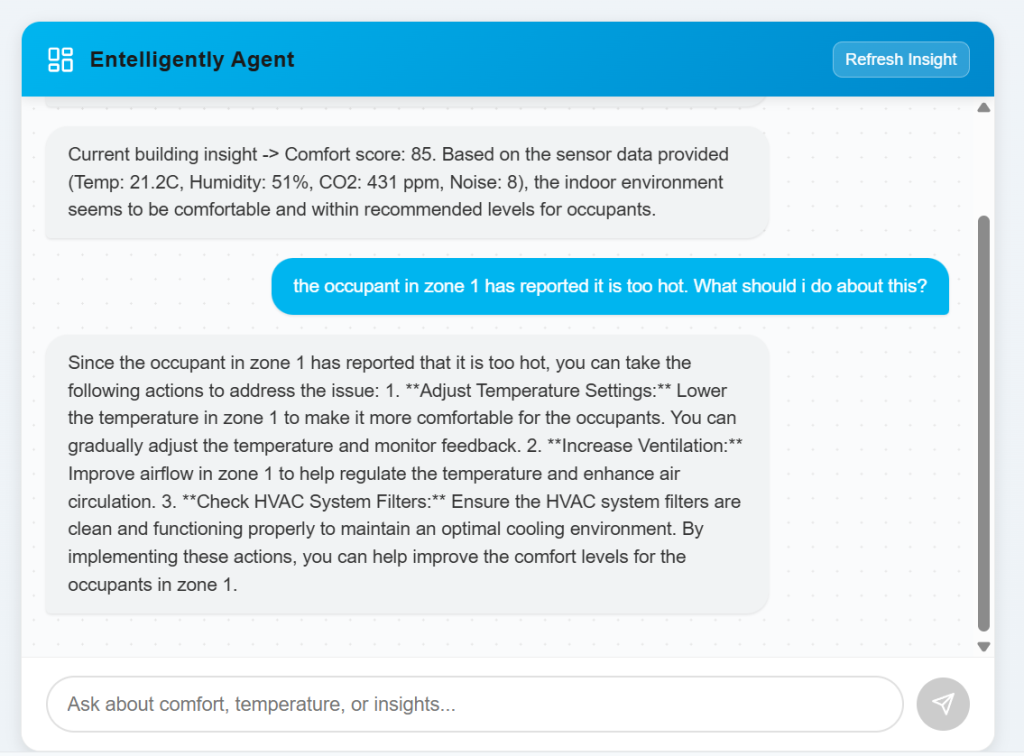
This is where the AI-driven layer within Entelligently becomes important. Rather than relying on individuals to spot patterns manually, the platform highlights relationships between conditions and outcomes.
For example, it can surface when rising CO₂ levels align with reported discomfort, or when a recurring issue in a specific space points to a deeper environmental or system imbalance.
This doesn’t replace human decision-making, but it supports it. It helps teams move more quickly from uncertainty to understanding.
Designed Around Real Operations
It’s easy to focus on technology, but building operations are ultimately about people.
Facilities teams are coordinating responses, managing expectations, and balancing competing priorities. Any system that doesn’t fit into that reality tends to be ignored over time.
Entelligently reflects this by supporting the practical side of operations. How information is shared, who needs to act, and how issues are tracked and resolved.
That might sound like a small detail, but in practice it’s what determines whether a platform becomes part of daily operations or just another dashboard.
What This Means in Practice
For estates teams, the impact is not in the technology itself, but in how it changes the way buildings are managed.
It enables a clearer understanding of how spaces are performing, faster identification of issues before they escalate, and more confidence in the actions taken to resolve them.
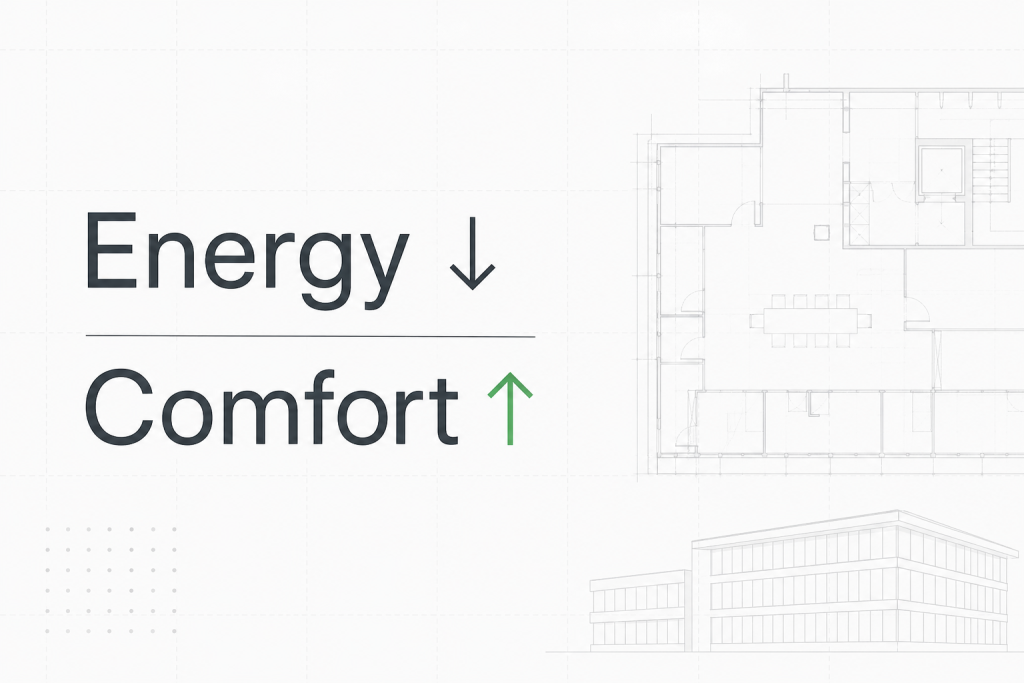
Ultimately, it supports a better balance between occupant comfort, operational efficiency, and energy performance.
Across the industry, there is growing evidence that combining real-time data with digital twin approaches and AI-driven optimisation can significantly improve both energy efficiency and occupant comfort. The key is making these capabilities usable in day-to-day operations and not just theoretical models.
A Platform That’s Evolving in the Right Direction
Entelligently has evolved significantly to support this more practical, operational focus.
The platform now provides a more flexible and modern foundation, making it easier to build richer dashboards, workflows and integrations. But the more important change is the direction of travel, towards making building data more visual, more contextual, and more actionable.
The introduction of the digital twin is a clear example of that shift. It moves the conversation away from abstract data and towards something much more tangible: understanding buildings as lived, working environments.
Interested in Exploring This for Your Buildings?
If you’re looking to move towards more effective smart building operations—or want to understand how a digital twin could apply to your estate—we’d be happy to have a conversation.
Use the Get in Touch button below to start the discussion.
0 Comments