EarthMuseum Learn, IQAir and a New Approach to Environmental Education
Most children learn about air quality through textbooks, classroom discussion and carefully prepared examples. But what happens when students can explore real environmental data, compare findings with learners in other locations, and investigate the world around them using evidence they can see for themselves?
This question sits at the heart of Air We Breathe, one of the first learning programmes developed by The Earth Museum and recently featured by IQAir, one of the world’s leading organisations in air quality monitoring and environmental data.
The programme combines storytelling, geography, history, environmental science and digital technology to help learners understand how air quality has shaped human experiences throughout history and continues to affect communities today.
For us at KnowNow Information, it has been particularly rewarding to see this recognition because we have been fortunate enough to support The Earth Museum in turning an ambitious educational vision into a working platform that learners can explore today.
The Vision Behind The Earth Museum
When Dr Janet Owen first described her vision for The Earth Museum, it was immediately clear that this was not simply another educational website.
Her ambition was to create a platform that helps people understand the world through place, story and evidence. Rather than presenting information as a collection of disconnected pages, learners would be encouraged to explore relationships between people, places, objects and events across the globe.
The aim is to help people learn without necessarily feeling that they are being taught.
By placing stories within their geographical context, learners are able to explore how environments, cultures, technologies and historical events connect to one another. Curiosity becomes the starting point for learning.
Air We Breathe is one of the first programmes developed using this approach. It explores the relationship between people and air quality through stories that span centuries, from natural environmental events and early settlements through to industrialisation, transport systems and modern pollution challenges.
Turning an Educational Vision into a Digital Platform
Like many ambitious ideas, the challenge was not simply defining the vision but creating the foundations needed to support it.
KnowNow Information began working with The Earth Museum using our Data Management Canvas methodology. This process helped identify the different users of the platform, the information they would need, how content would be structured, and how the platform could evolve over time.
This early work helped establish:
- Content and metadata structures
- Learning programme organisation
- Governance and ownership considerations
- Future content management requirements
- Search and discovery requirements
- Opportunities for future AI-assisted exploration
By defining these foundations before development began, The Earth Museum was able to create a platform capable of supporting future growth rather than simply solving today’s challenges.
Building an Interactive Learning Experience with Cesium
A key part of bringing The Earth Museum to life was creating an engaging way for learners to explore content.
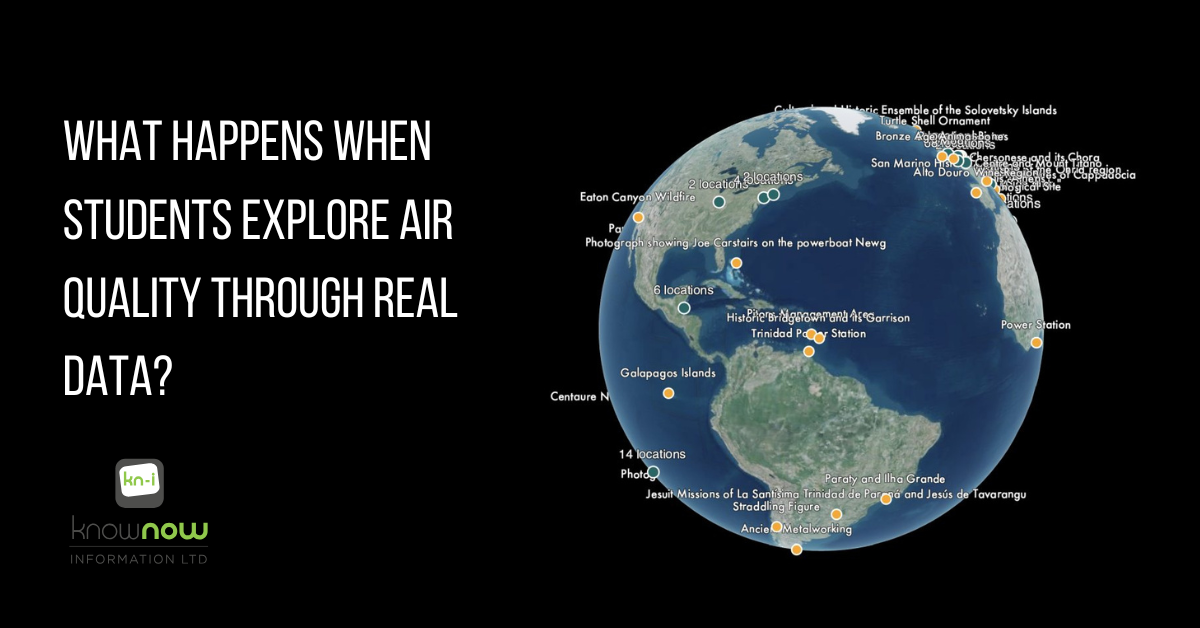
Our Lead AI and Data Engineer, Ashik Sunilkumar, led the technical implementation of the platform’s interactive globe experience using Cesium, a powerful geospatial visualisation technology.
Rather than navigating through traditional menus and folders, learners can explore a three-dimensional digital Earth, moving between locations and discovering stories connected to specific places.
This creates a fundamentally different experience from many educational platforms.
A learner studying air quality can move from modern-day pollution challenges in cities to historical events such as the Industrial Revolution, exploring how geography, technology and human behaviour have influenced the air we breathe over time.
The globe becomes more than a navigation tool. It becomes part of the learning experience itself.
How Real Air Quality Data Creates New Learning Opportunities
The recent IQAir feature highlights an exciting next stage in the evolution of Air We Breathe.
The introduction of air quality monitoring and sensor technology creates opportunities for learners to engage with environmental issues in ways that extend beyond the traditional curriculum.
Instead of simply learning about pollution, students can investigate it.
They can:
- Measure air quality in their local area
- Compare results with other schools and communities
- Explore how weather conditions influence pollution levels
- Investigate the impact of traffic and transport
- Analyse trends and patterns over time
- Discuss the social and economic factors that influence environmental outcomes
This moves learning from memorising information towards asking questions, gathering evidence and drawing conclusions.
In many respects, it mirrors the way scientists, researchers and policymakers work in the real world.
Connecting Science, Geography, Mathematics and Citizenship
One of the most exciting aspects of using real environmental data is that it naturally connects multiple curriculum subjects.
Science
Students can learn about environmental systems, sensors, measurement techniques and evidence-based investigation.
Geography
Learners can explore how place influences environmental conditions and compare regions across the UK and internationally.
Mathematics
Real-world data provides opportunities to work with graphs, averages, trends and statistical analysis.
History
Students can connect current environmental challenges with historical events and understand how human activity has changed over time.
Citizenship
Discussions can explore responsibility, decision-making, sustainability and the balance between environmental, social and economic priorities.
This interdisciplinary approach helps learners see how knowledge from different subjects combines to help us understand real-world challenges.
Why Environmental Data Matters for Future Skills
Beyond the curriculum, projects such as Air We Breathe help develop skills that are becoming increasingly important in modern society.
Data literacy, critical thinking, evidence evaluation and digital confidence are now valuable capabilities across almost every profession.
By working with real environmental information, learners gain experience in interpreting data, questioning assumptions and understanding how evidence informs decisions.
These are skills that extend well beyond the classroom.
As artificial intelligence and data-driven technologies continue to influence society, helping young people understand how data is collected, interpreted and used will become increasingly important.
Looking Ahead
The recognition from IQAir is a significant milestone for The Earth Museum and reflects the growing interest in innovative approaches to education, environmental awareness and digital learning.
For KnowNow Information, it is particularly satisfying to see how Janet Owen’s original vision continues to evolve.
What began as an idea about helping people understand the world through place and storytelling is now creating opportunities for learners to explore real environmental data, investigate global challenges and connect their own experiences with those of others.
We are proud to have played a part in helping bring that vision to life and excited to see how initiatives such as the IQAir sensor deployment continue to expand what is possible.
Congratulations to Janet Owen and The Earth Museum team on this latest achievement. We look forward to seeing where the next stage of the journey leads.
Learn More
Read the full IQAir feature:
https://www.iqair.com/gb/newsroom/earthmuseum-learn-connects-classrooms-through-air-quality-data
Learn more about The Earth Museum:
https://earthmuseum.global
Learn more about KnowNow Information’s work in Data Management, AI Systems and Application Design:
https://www.kn-i.com
Have an idea that could change how people learn, explore or engage with information?
At KnowNow Information, we help organisations turn ambitious ideas into practical digital solutions through data strategy, AI systems, application design and delivery.
Whether you are developing a learning platform, heritage experience, research portal or data-driven service, we would be delighted to discuss how we can help.
Use the Get in Touch button below to start the conversation.
0 Comments